February marks National Age-Related Macular Degeneration (AMD) Month, a time dedicated to raising awareness about this prevalent eye condition. At Family Vision Development Center, we believe it’s crucial to inform our patients about AMD, its risk factors, symptoms, and management strategies. Therefore, we would like to share some important information about the basics of AMD and explore how we can assist in managing this condition effectively.
What is Age-Related Macular Degeneration (AMD)?
AMD is a progressive eye disease that affects the macula, the central part of the retina responsible for sharp, central vision. Over time, AMD can lead to blurred or distorted vision, making it challenging to perform tasks such as reading or driving.
Types of AMD
- Dry AMD: This form of AMD is more common, characterized by the gradual breakdown of light-sensitive cells in the macula.
- Wet AMD: Less common but more severe, wet AMD involves the growth of abnormal blood vessels beneath the macula, which can leak blood and fluid, leading to rapid vision loss if left untreated.
Risk Factors for AMD
- Age: AMD primarily affects individuals over the age of 50.
- Family History: Genetics play a significant role in predisposing individuals to AMD.
- Smoking: Tobacco use increases the risk and progression of AMD.
- Obesity: Being overweight or obese is associated with a higher likelihood of developing AMD.
- High Blood Pressure: Hypertension can contribute to the progression of AMD.
- Sun Exposure: Prolonged exposure to ultraviolet (UV) light may increase the risk of AMD.
Symptoms of AMD
- Gradual loss of central vision
- Distorted or blurry vision
- Difficulty reading or recognizing faces
- Increased sensitivity to glare
- Decreased color perception
How Family Vision Development Center Can Help Manage AMD
- Comprehensive Eye Examinations: Regular eye exams are crucial for early detection and monitoring of AMD. During your exam, we will perform various tests, including visual acuity tests, dilated eye exams, and imaging tests, to assess the health of your retina.
- Personalized Treatment Plans: Depending on the type and severity of AMD, we may recommend specific treatments, such as:
- Nutritional supplements containing vitamins and minerals beneficial for eye health.
- Anti-VEGF (vascular endothelial growth factor) injections to inhibit the growth of abnormal blood vessels in wet AMD.
- Low vision aids and devices to help improve visual function and quality of life for individuals with advanced AMD.
Treatment options for both wet and dry AMD are continually changing and improving, such as evolving drug therapies, gene therapy for wet AMD, advancing anti-VEGF treatments, and even stem cell transplants. We stay informed of developments as they become available and work with patients to determine the best course of treatment.
- Lifestyle Modifications: Another way we help our patients is by providing guidance on lifestyle changes that may help manage AMD and reduce its progression. This may include quitting smoking, maintaining a healthy diet rich in antioxidants and omega-3 fatty acids, wearing UV-protective sunglasses, and managing underlying health conditions like hypertension.
- Patient Education and Support: Of course, we will always serve as a valuable resource for educating our patients about AMD, answering questions, and providing support throughout their treatment journey. We do our best to offer advice on adapting daily activities to accommodate changes in vision, and refer patients to support groups or other services if needed.
As we observe National Age-Related Macular Degeneration Month, it’s essential to prioritize eye health and raise awareness about AMD. By understanding the risk factors, symptoms, and management options for AMD, our patients can take proactive steps to preserve their vision. Your eye doctor plays a crucial role in diagnosing, treating, and supporting individuals affected by AMD, so don’t hesitate to contact us at 630-862-2020 to schedule your regular eye exam and seek guidance for optimal eye care.
Family Vision Development Center is a full-service vision center offering innovative vision therapy services, sports vision therapy services, post-concussive vision rehabilitation, comprehensive vision exams for eyeglasses and contact lenses, management of ocular diseases including glaucoma, diabetes, macular degeneration and cataracts, and a state-of-the-art optical center offering the latest designs in eyewear.
Regular comprehensive vision exams may not be on the top of most people’s list of important things to do. But they absolutely should be! In fact, getting your vision examined every year is one of the most important things you can do to protect your overall health and well-being. While we feel that there are dozens of reasons why vision exams are essential, here are a few of the top reasons to visit us for an annual appointment.
Prescriptions Can Change
Vision can change over time, so annual vision exams help ensure that your prescription for glasses or contact lenses is up-to-date. Wearing an outdated prescription not only leads to discomfort, but can also contribute to eye strain, headaches, and can even worsen existing vision problems. Keeping your prescription current ensures that you are seeing the world clearly and comfortably.
Vision Exams Help Track Vision Changes Quickly
Comprehensive vision exams check your vision, the inner and outer parts of your eyes, and measure how well your eyes work together as a team. Even if the exam determines that no corrective measures are needed, the results serve as a baseline for future exams. Consistent vision exams can help us quickly recognize signs of a developing vision disorder, such as glaucoma or macular degeneration, and can allow for early and more effective treatment. In essence, regular vision exams act as proactive checkpoints, enabling us to address vision changes promptly and help you to maintain optimal eye health.
Vision Exams can Reveal Signs of Dangerous Health Problems
Believe it or not, your eyes can provide valuable insights into your overall health. During an eye exam, we may identify signs of systemic health issues such as diabetes, hypertension, and high cholesterol. Changes in the blood vessels, retina, or even the appearance of yellowish deposits in the eye can serve as early indicators of these conditions. Detecting and addressing these issues promptly can have a positive impact on your overall health.
Get Important Vision Questions Answered on a Regular Basis
At Family Vision Development Center, we are always happy to share our wealth of knowledge. We stay informed of the latest eyecare topics, the most current vision therapy treatment options and the latest in eyeglass and contact lens technology. It is important to have a true partner in maintaining your eye health, and we are here to help ensure that you have a reliable source of information when the need arises.
Preserve your Vision on a Long-Term Basis for Overall Quality of Life
Healthy vision is an essential component of daily life. When your vision suffers, everyday tasks can become more difficult. In essence, clear vision is fundamental to our daily activities, from work to leisure. By addressing any vision issues promptly, you can maintain an optimal quality of life. Whether it’s reading a book, driving a car, or enjoying your favorite hobbies, proper vision is important. Yearly vision exams help ensure that you can continue to engage in these activities to the fullest extent possible.
Family Vision Development Center is here to help ensure your complete eye health with comprehensive vision services that range from eyeglasses and contacts to effective vision therapy programs, and even post-concussive visual rehabilitation following a head injury. But it all starts with the vision exams! Contact us today at 630-862-2020 to schedule your appointment and get started on a commitment to healthy vision for life.
Family Vision Development Center is a full-service vision center offering innovative vision therapy services, sports vision therapy services, post-concussive vision rehabilitation, comprehensive vision exams for eyeglasses and contact lenses, management of ocular diseases including glaucoma, diabetes, macular degeneration and cataracts, and a state-of-the-art optical center offering the latest designs in eyewear.
Many people experience motion sickness, and it can be very uncomfortable, annoying and disruptive during daily activities. People who suffer from motion sickness often have difficulty with actions such as reading while riding in a car or plane, travelling by boat, looking at stationary objects while in motion, watching oncoming traffic, watching a 3-D movie or riding an amusement park ride. Symptoms of motion sickness can include:
- Nausea and vomiting
- Dizziness
- Headache
- Fatigue
- Cold sweats
- Rapid breathing
- Increase in saliva production
Motion Sickness Connection to Vision
Motion sickness can occur when there is a disconnection between what the eyes see and the signals the brain receives from the inner ear and other sensory systems. When visual input contradicts the body’s perception of motion, it can lead to a sensory mismatch, triggering symptoms like nausea and dizziness.
For individuals with vision issues, this disconnect becomes more pronounced. Conditions such as strabismus (eye misalignment), amblyopia (lazy eye), or convergence insufficiency (difficulty coordinating both eyes to focus on nearby objects) can disrupt the normal functioning of the visual system. When these conditions are present, the eyes may struggle to work together efficiently, exacerbating the sensory mismatch that contributes to motion sickness.
Vision Therapy for Motion Sickness
Vision therapy is a specialized form of visual rehabilitation that retrains how the eyes and brain communicate with each other. It involves a personalized program of eye exercises and activities designed to enhance eye coordination, tracking, and focus. When it comes to motion sickness, vision therapy can play an important role in addressing the underlying visual issues that can contribute to the condition by accomplishing the following goals:
- Strengthening Eye Muscles – Vision therapy exercises often target the muscles responsible for eye movement and coordination. By engaging in activities that promote the strength and flexibility of these muscles, individuals can enhance their ability to maintain visual focus and reduce strain during motion.
- Improving Eye-Body Coordination – Vision therapy also helps strengthen the connection between the eyes and the body’s movements. Activities that enhance eye-body coordination can help individuals adapt more effectively to changes in their visual environment. This can help reduce the likelihood of experiencing motion sickness.
- Enhancing Depth Perception – Conditions like strabismus can impact depth perception, making it difficult for the eyes to work together in perceiving distances accurately. Vision therapy exercises can improve depth perception, allowing individuals to better judge spatial relationships and reduce the disorienting effects of conflicting visual signals.
- Correcting Convergence Insufficiency – Convergence insufficiency, where the eyes struggle to work together as a team, can contribute to eye strain and discomfort during tasks like reading or focusing on nearby objects. Vision therapy can target these issues, promoting more efficient eye teaming and reducing the likelihood of visual discomfort that may contribute to motion sickness.
Family Vision Development Center for Vision Therapy
The team at Family Vision Development Center has advanced training in vision therapy treatment options. If you find that motion sickness is disrupting your daily activities, come in for a consultation so we can determine the best options for you. Each vision therapy program is individualized according to your specific needs so we can target the exact underlying visual issues with the appropriate exercises. Contact us at 630-862-2020 to learn more about the benefits of vision therapy for eliminating the bothersome effects of motion sickness.
Family Vision Development Center is a full-service vision center offering innovative vision therapy services, sports vision therapy services, post-concussive vision rehabilitation, comprehensive vision exams for eyeglasses and contact lenses, management of ocular diseases including glaucoma, diabetes, macular degeneration and cataracts, and a state-of-the-art optical center offering the latest designs in eyewear.
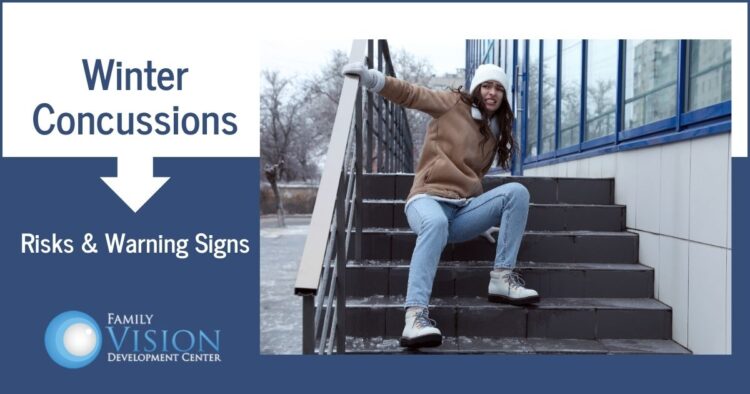
There are a lot of reasons to enjoy winter. After all, it’s the time of joyous holidays and beautiful, snow-covered landscapes. However, it can also bring an increased risk of concussions and that is something to take seriously. At Family Vision Development Center, our priority is protecting and caring for our patients’ vision. Because the colder months can present their own set of hazards that can lead to head injuries – and those injuries can greatly impact a person’s vision – we feel it is important to make you aware of the potential risks of concussions during this time of year, as well as provide information about what to do following an injury.
Potential Winter Hazards
This winter, be aware of the following risks that can lead to concussions:
- Slippery surfaces – Winter is synonymous with icy sidewalks, snowy driveways, and slippery roads. The increased likelihood of slips and falls on these surfaces raises the risk of head injuries and concussions. Walking outside, even for a moment, can pose a slip-and-fall hazard, as ice may not be clearly visible. And driving can certainly be more dangerous during periods of snow and reduced traction, which can lead to an increased risk of auto accidents.
- Winter Sports – Activities like skiing, snowboarding, and ice hockey are popular winter pastimes, but they also carry an inherent risk of head injuries. Collisions, falls, and abrupt stops common in these sports can result in concussions. It is crucial to wear appropriate protective gear, including helmets, to mitigate these risks.
- Reduced Visibility – Winter weather often brings reduced visibility due to fog, snowfall, or early darkness. Impaired visibility increases the chances of accidents, falls, and collisions, subsequently elevating the risk of concussions.
Visual Concerns Following Concussions
While the immediate symptoms of a concussion often include headaches, dizziness, and confusion, the effects on vision are not always as apparent. Here are some ways concussions can affect vision:
- Eye focusing – not being able to quickly and easily see an object clearly (objects look blurry)
- Eye Movements and Tracking – not able to easily follow a moving object from one spot to another, or switch fixation from one object to another. Sometimes this can be reported by students saying that words are moving on the page.
- Depth Perception Issues – difficulty with accurately judging the distance between objects.
- Eye Teaming – not able to get both eyes to work together to focus on an object, often reported as double vision
- Peripheral Vision Loss – problems with your wide-angle field of vision, or feeling like you’re looking through a narrow tube
In addition to the visual issues mentioned above, any of the following symptoms can be an indicator of a possible concussion:
- Headache
- Nausea or vomiting
- Dizziness or balance problems
- Confusion or forgetfulness
- Loss of consciousness
- Sensitivity to light or noise
- Feeling sluggish, groggy or slowed down
- Mood or personality changes
- A general feeling that something is not right
- Difficulty with sleep
Family Vision for Post-Concussive Visual Rehabilitation
The Family Vision team has specialized training in post-concussive neuro-optometric rehabilitation. We can customize this special type of vision therapy program to target the concussion symptoms you are experiencing in order to restore visual abilities. Those who have experienced a head injury often have difficulty participating in normal, daily activities that once were accomplished easily. It is our passion to help those patients return to their daily lives and continue to pursue their interests. Contact us at 630-862-2020 to get more information or to schedule a consultation.
Family Vision Development Center is a full-service vision center offering innovative vision therapy services, sports vision therapy services, post-concussive vision rehabilitation, comprehensive vision exams for eyeglasses and contact lenses, management of ocular diseases including glaucoma, diabetes, macular degeneration and cataracts, and a state-of-the-art optical center offering the latest designs in eyewear.