
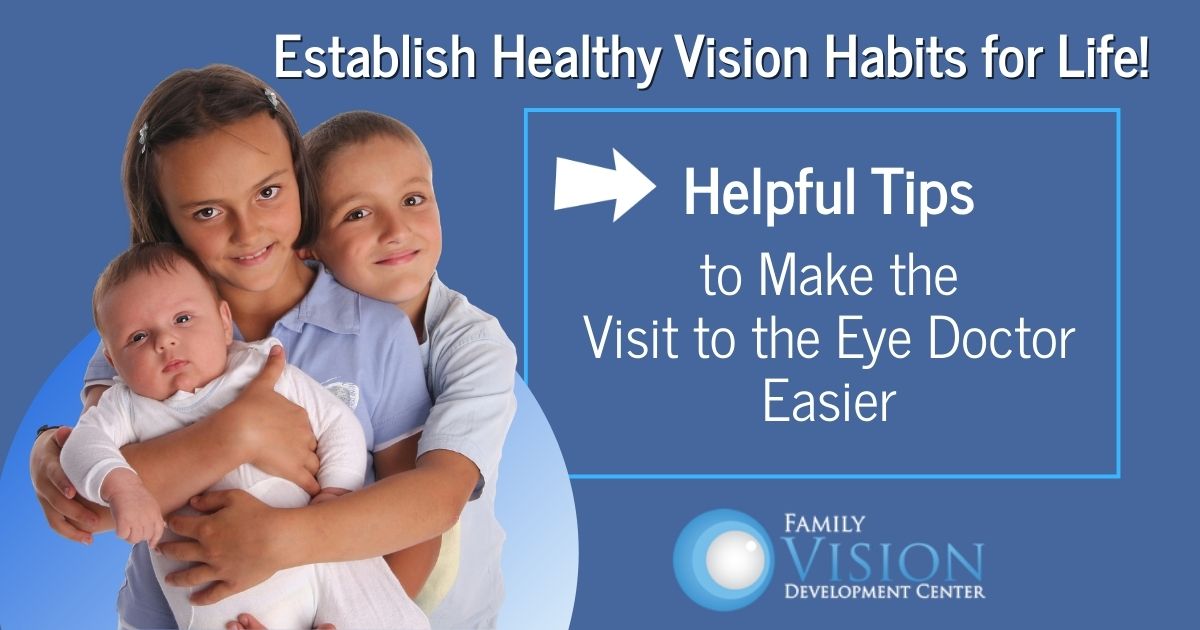
Regular vision exams play an important role in helping your child see clearly, learn effectively, and stay confident as they grow. But for many kids, a trip to the optometrist can seem intimidating, especially if they aren’t sure what to expect. Properly preparing your child for the appointment can help to make every vision exam a success. Here’s how to make the most of every exam as they grow.
Infants and Toddlers (6 months to 3 years)
Start early and stay calm. The American Optometric Association recommends a child’s first comprehensive vision exam around 6 months of age. These early exams are gentle, involving lights, pictures and observations rather than verbal responses.
How to prepare:
- Schedule the appointment during your child’s happiest time of day, such as after a nap and feeding if possible.
- Stay positive; babies sense your stress. Treat the visit like a fun “show and tell” about their eyes.
- Bring a favorite toy or blanket for comfort.
At these early appointments, we check eye alignment, movement, and basic visual development to ensure everything is on track.
Preschool and Early Elementary (Ages 3–7)
As your child becomes more verbal and aware of routines, making the experience playful is key.
How to prepare:
- Explain what will happen during the vision exam using simple, friendly language, such as “The doctor will look at your eyes with lights and show you pictures.”
- Play “pretend eye doctor” at home by letting your child look into your eyes with a flashlight or match letters and shapes on paper.
- Emphasize that there are no “right” or “wrong” answers, just ways to learn more about how well they see.
This is an important time to start building healthy habits and helping kids to form positive emotions when it comes to the eye doctor. Establishing a comfortable, happy experience now will help them look forward to these appointments, rather than feeling fear or anxiety.
School-Age Children (Ages 8–12)
By this stage, kids start to understand the connection between clear vision and school performance, sports, and hobbies.
How to prepare:
- Involve your child in the scheduling process and explain the importance of checking their eyes as they grow.
- Encourage them to ask questions during the vision exam and share whether they’ve noticed any vision issues, like trouble seeing the board or eye strain during reading.
- Highlight the link between healthy habits, like taking screen breaks and wearing protective eyewear, and strong vision.
If your child needs corrective lenses, talk about responsibility and care. Encourage more independence by letting them clean and store their glasses or contacts (if appropriate) on their own.
Teens and Pre-College (Ages 13–18)
By this age, they should be able to fully participate in the appointment experience and build the basis for continued vision care as they become adults.
How to prepare:
- Let your teen lead the conversation with the optometrist, as it encourages them to take ownership of their eye health.
- Let them be fully involved in the procedures and results, such as viewing their retinal images and asking questions on their own.
- Let them develop their personal style and self-expression by exploring different frame options and lens coatings that reflect their lifestyle and activities.
Your Vision Exam with Family Vision Development Center Supports Kids Through Every Age and Stage
Positive experiences with vision exams from an early age build lifelong comfort with vision care. When children feel informed, supported, and heard, they’re more likely to maintain good eye health into adulthood. We are your partner in that journey, ready to adjust strategies as your child grows, learns, and sees the world in new ways. Reach out to our team at 630-862-2020 to schedule your child’s appointment or to ask any questions.
Family Vision Development Center is a full-service vision center offering innovative vision therapy services, sports vision therapy services, post-concussive vision rehabilitation, comprehensive vision exams for eyeglasses and contact lenses, management of ocular diseases including glaucoma, diabetes, macular degeneration and cataracts, and a state-of-the-art optical center offering the latest designs in eyewear.