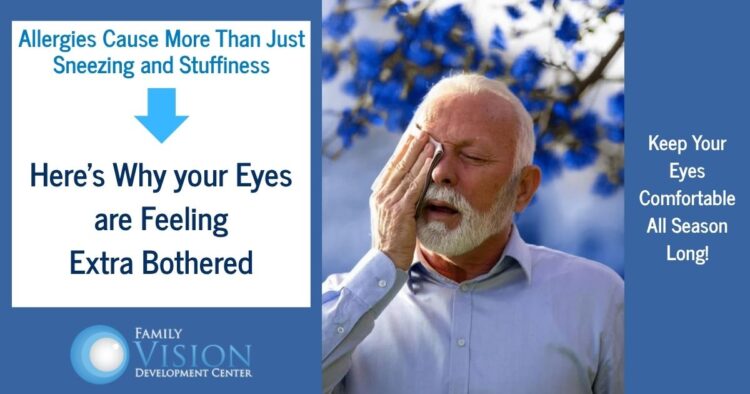
Allergy season is here, and that means many people are experiencing the typical sneezing and congestion that comes along with it. But, it can also mean trouble for your eyes. Understanding why your eyes feel worse during allergy season can help you take the right steps to protect your vision and know when it’s time to pay us a visit.
Increased Exposure to Airborne Allergens
During allergy season the air is filled with common triggers like pollen, dust and mold spores. When your eyes are exposed to these allergens, it can cause an immune response with classic symptoms such as redness, itching and watery eyes. The more time you spend outside, or even near open windows, means increased exposure for your eyes and a greater chance of symptoms making your eyes feel worse.
Dry Eye Symptoms Can Feel Worse
Many people that regularly experience dry eye symptoms notice that those symptoms get even worse during allergy season. That is because rubbing, inflammation, and environmental triggers can all interfere with the natural tear production that keeps the eyes lubricated and comfortable. Feelings of burning, stinging or grittiness are all typical dry eye symptoms, but they can easily be confused with allergy symptoms. We can help determine what is causing these symptoms and suggest appropriate treatment to alleviate the discomfort.
Contact Lenses Can Trap Allergens
For people who wear contacts, allergy season can be especially troublesome. Allergens can end up sticking to the lenses and actually trapping the irritants against the surface of your eye. This can make your eyes feel especially dry, itchy and uncomfortable. If these problems persist or are too disruptive to your daily routine, we can evaluate the situation and possibly recommend a temporary switch to daily disposable lenses or even glasses, in order to give your eyes a break.
Rubbing your Eyes Makes it Worse
Naturally, when your eyes are irritated or scratchy, the first response is to rub them. Unfortunately, during allergy season that just makes the situation worse. When you rub your eyes, it releases more irritating histamines, inflammation gets worse, and the delicate eye tissue can become damaged. This can create a cycle where itching leads to rubbing, and rubbing leads to even more discomfort. A better way of dealing with irritated eyes would be to rinse the eye or apply a cold compress.
Allergic Conjunctivitis May be an Issue
When allergies directly affect the eyes, the condition is known as allergic conjunctivitis. This is one of the most common reasons for worsening eye symptoms during allergy season. Signs of allergic conjunctivitis include red, swollen eyelids, excessive tearing, sensitivity to light or excessive itching. Mild cases can often be managed with over-the-counter treatments, but if symptoms are more severe might need to prescribe eye drops or suggest other stronger treatments.
Protect your Eyes this Allergy Season
It’s easy to dismiss allergy-related eye symptoms as something you just have to live with, but that’s not the case. If your symptoms are persistent or worsening, a comprehensive eye exam can help determine whether allergies, dry eye or another condition is to blame.
At Family Vision Development Center, we can help during allergy season by:
- Recommending specific treatments to relieve allergy symptoms
- Evaluating your tear film and eye health
- Suggesting contact lens alternatives or adjustments
- Prescribing medicated eye drops or other treatments if needed
Don’t ignore continuous discomfort because you feel like there are no other options. Contact us at 630-862-2020 to schedule an exam and find lasting relief for long-term eye health.
Family Vision Development Center is a full-service vision center offering innovative vision therapy services, sports vision therapy services, post-concussive vision rehabilitation, comprehensive vision exams for eyeglasses and contact lenses, management of ocular diseases including glaucoma, diabetes, macular degeneration and cataracts, and a state-of-the-art optical center offering the latest designs in eyewear.
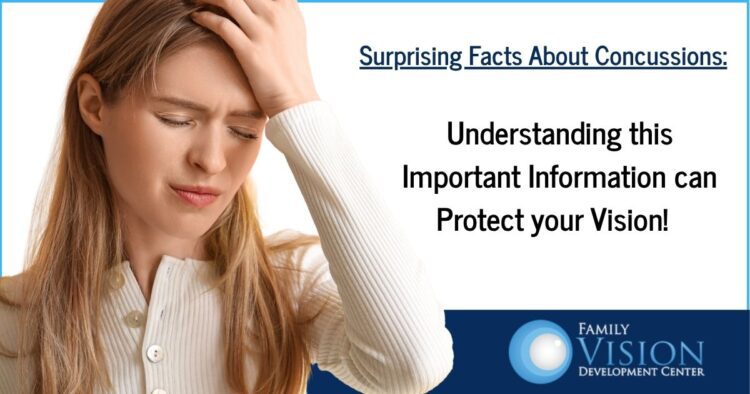
Concussions are much more complex than many people realize. This type of injury is typically associated with an athlete taking a hit during a game. But the reality is that concussions happen far more often in everyday life, from car accidents to falls and even minor bumps to the head. A concussion is a form of Traumatic Brain Injury (TBI) that affects how the brain functions. What many people don’t realize is that concussions frequently impact vision as well. In fact, because the brain controls vision, visual symptoms are among the most common problems after a head injury.
Here are several little-known facts about concussions that may surprise you – and why addressing vision problems is often an essential part of recovery.
Most Concussions Affect Vision
It may be surprising to learn that over half of the brain’s pathways are involved in vision and visual processing. Because of this, concussions frequently affect the communication between the eyes and the brain. After a concussion, people may experience symptoms such as:
- Blurred or double vision
- Difficulty focusing
- Eye strain
- Headaches during reading or screen use
- Light sensitivity
- Trouble tracking moving objects
- Poor depth perception
Many people assume these symptoms will simply go away with time. While some can improve on their own, others will require specialized care. This is where post-concussive vision therapy can play a key role in restoring normal visual function.
You Don’t Have to Lose Consciousness to Have a Concussion
A common myth is that a concussion only occurs if someone blacks out. But in reality, most people who experience a concussion never lose consciousness. Even a seemingly minor event such as slipping on ice, hitting your head on a cabinet door, or being involved in a minor car accident can cause the brain to shift inside the skull. If visual symptoms appear after any head injury, it’s important to have your vision evaluated by a professional trained in post-concussion care, like our team at Family Vision Development Center.
Vision Problems Can Appear Days or Weeks Later
Another little-known fact is that concussion symptoms are not always immediate. Some people feel relatively normal at first but begin experiencing issues later. Visual symptoms that may appear days or weeks after a concussion include:
- Difficulty reading
- Words moving on the page
- Trouble concentrating on screens
- Motion sensitivity
- Dizziness in busy environments like grocery stores
Because these symptoms develop gradually, many people don’t connect them to the original injury.
Children Often Struggle in School After a Concussion
A student that is recovering from a concussion may find that visual tasks become much more difficult when they return to school. Reading, writing, computer work, and focusing on classroom materials all require strong visual skills. When these skills are affected, students may experience:
- Reduced reading comprehension
- Difficulty concentrating
- Headaches during homework
- Fatigue with schoolwork
These symptoms can sometimes be mistaken for learning or attention problems, when the underlying issue is actually due to the effects of the concussion.
Vision Therapy Can Help Retrain the Connection Between the Eyes and Brain
Many concussion-related vision problems can improve with structured vision rehabilitation. This neuro-optometric rehabilitation uses targeted exercises and activities that can actually retrain the connection between the eyes and the brain. These programs are customized to restore affected visual skills such as eye tracking, eye teaming, ability to focus, visual processing and depth perception.
Family Vision Development Center Understands Concussions and Provides Extensive Vision Rehabilitative Care
Concussions are serious injuries that require appropriate care. When vision is impaired following a head injury, our team has the training and experience to properly diagnose and treat the problem in order to restore proper visual function. We have specialized vision therapy programs that focus on neuro-optometric visual rehabilitation, so our patients can quickly recover important visual skills and return to daily activities with greater comfort and confidence. Reach out to our Aurora location at 630-862-2020 to schedule your appointment.
Family Vision Development Center is a full-service vision center offering innovative vision therapy services, sports vision therapy services, post-concussive vision rehabilitation, comprehensive vision exams for eyeglasses and contact lenses, management of ocular diseases including glaucoma, diabetes, macular degeneration and cataracts, and a state-of-the-art optical center offering the latest designs in eyewear.