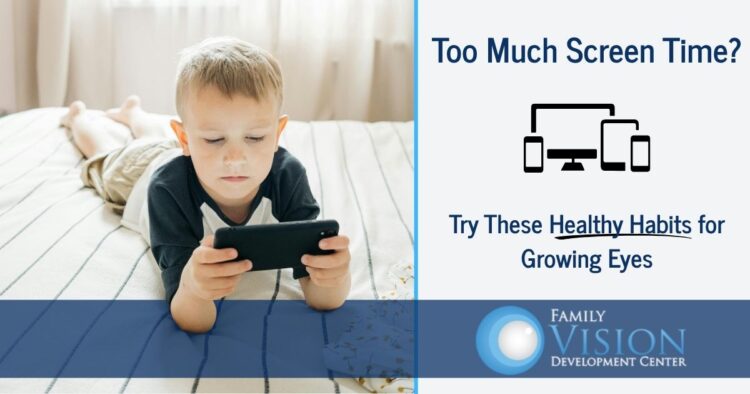
It’s summertime and the kids are getting a nice break from school. But, that free time unfortunately often leads to excessive screen time. If they are wasting their time staring at a phone screen instead of spending quality time outdoors or with friends, it can have a lasting effect – not just on their social skills, but also on their vision.
The Effect of Screen Time on Vision
When a child uses a digital device, they are often focusing on images that are close up for an extended period of time. This constant concentration can put added stress on the eyes and can lead to a condition known as digital eye strain. Some common symptoms of digital eye strain include:
- Tired or sore eyes
- Blurry vision
- Frequent headaches
- Dry or watery eyes
- Difficulty focusing
The Link Between Digital Screen Time and Nearsightedness
In addition to the symptoms provided above, there is an even bigger concern for kids using digital devices. Excessive screen time, combined with less time outdoors in the natural sunlight, can have detrimental effects. In fact, kids that spend even one hour per on day on a digital screen see an increased risk of developing myopia, or nearsightedness. And, that risk continues to rise with each additional hour of screen time.
It is not always avoidable, especially with the rise in screen use in the classroom, but parents that limit screen time during the summer months can help protect their child’s vision now, as well as decrease the risk of developing serious eye conditions that are linked to myopia later in life.
Healthy Habits for Screen Time
Some screen time is necessary, and is to be expected even during summer. But luckily, there are some ways to minimize the negative effects of digital screens.
- Every 20 minutes, make sure to look at something that is at least 20 feet away for 20 seconds. This is appropriately called the 20-20-20 rule, and it helps the focusing muscles in the eyes relax.
- Keep phones and tablets about 18 inches away from your eyes, and keep computer monitors about an arm’s length away in order to maintain a healthy viewing distance.
- Avoid digital screens before bedtime, as blue light can affect the quality of sleep as well as eye comfort.
- Blinking is essential because it spreads tears across the surface of the eyes, keeping them from becoming dry and irritated, and reducing burning, redness and blurry vision.
Maintain your Child’s Healthy Vision at Family Vision Development Center
Regular visits for comprehensive eye exams with our team can go a long way in protecting your child’s vision now and into the future. Vision exams allow us to fully evaluate the way your child’s eyes work together as a team, along with their focusing ability and overall eye health. With regular visits, we can quickly determine when a new issue arises, which allows us to more effectively treat any problems that may interfere with their daily activities, such as school, sports or social interactions. Contact us today at 630-862-2020 to learn more about our practice or to schedule an appointment.
Family Vision Development Center is a full-service vision center offering innovative vision therapy services, sports vision therapy services, post-concussive vision rehabilitation, comprehensive vision exams for eyeglasses and contact lenses, management of ocular diseases including glaucoma, diabetes, macular degeneration and cataracts, and a state-of-the-art optical center offering the latest designs in eyewear. We are dedicated to keeping our patients comfortable and well-informed and we will explain every exam and procedure and answer all of your questions. We accept both scheduled and emergency appointments, and offer convenient financing and insurance options to ensure that high-quality vision care is available and affordable to all of our patients.
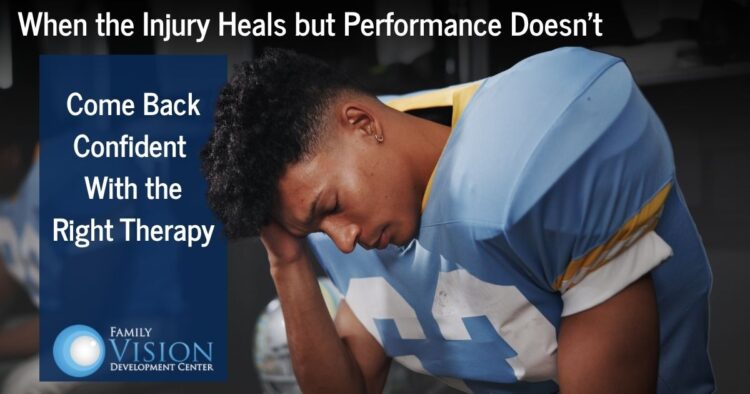
For many athletes, summer is a time to prepare for the next season, often focusing on strength training, conditioning, and skill development. But for athletes recovering from a concussion, eye injury, or a disappointing season, summer can also be an opportunity to rebuild something that is often overlooked: visual performance.
The ability to track a moving ball, react quickly to changing situations, judge distances accurately, and maintain awareness of surrounding players all depend on visual skills. After an injury, or even an extended period away from competition, those skills may not be functioning at their best. Sports vision therapy and neuro-optometric rehabilitation can help athletes restore and strengthen the visual skills that are needed for both performance and safety, giving them greater confidence as they return to competition.
An Injury Can Impact Visual Skills
Many athletes assume that once their symptoms are gone, they are ready to return to play. Unfortunately, injuries like concussions can affect the complex connection between the eyes and the brain long after obvious symptoms fade. Common visual problems that may develop after a concussion or injury include:
- Difficulty tracking moving objects
- Delayed reaction times
- Problems with eye teaming and focusing
- Reduced peripheral awareness
- Double vision or blurred vision
- Trouble judging distances accurately
- Difficulty processing visual information quickly
These challenges can make an athlete feel slower, less confident, or less coordinated than they were before the injury. In some cases, athletes may not even realize that visual problems are contributing to their struggles. They simply know that something feels different, or off, when they return to practice or competition.
What Is Sports Vision Therapy?
Sports vision therapy is a customized program designed to improve the visual skills that support athletic performance. Unlike a standard eye exam, vision therapy focuses on how effectively the eyes and brain work together to process visual information. Depending on the athlete’s needs, therapy may target:
- Eye tracking
- Visual processing speed
- Dynamic focusing abilities
- Depth perception
- Eye-hand coordination
- Visual reaction time
- Peripheral awareness
- Balance and visual-motor integration
These skills are essential for strong performance in most sports, from baseball and softball to soccer, football, basketball, hockey, and tennis.
Neuro-Optometric Rehabilitation After Concussion
For athletes recovering from concussions or other brain injuries, neuro-optometric rehabilitation offers an additional layer of support. This specialized form of therapy focuses on restoring visual skills that may have been affected by an injury. Because the visual system involves multiple areas of the brain, even a mild concussion can create challenges that can affect athletic performance and daily activities. Neuro-optometric rehabilitation may help athletes improve:
- Visual comfort
- Balance and spatial awareness
- Tracking and focusing abilities
- Processing speed
- Coordination between vision and movement
By addressing these needs directly, it can make it easier for an athlete to successfully return to play.
Summer is a Great Time for Athletes to Get Started
The weeks leading up to a new season can be a valuable time to prepare. Rather than waiting until problems appear during competition, athletes can use the offseason to strengthen their visual skills, address lingering effects of an injury, and rebuild their confidence. Whether an athlete is returning from a concussion, recovering from an eye injury, or looking to improve their skills after a challenging season, sports vision therapy and neuro-optometric rehabilitation can provide a structured path forward.
We Help Athletes Improve Performance
At Family Vision Development Center, we have extensive training in both sports vision therapy and neuro-optometric rehabilitation so we can meet the needs of any athlete looking to sharpen their skills and improve their performance in the game. We work closely with athletes who are recovering from injury to restore essential visual acuity, as well as those who want to gain a competitive edge over the competition. Reach out to our team to learn more by calling 630-862-2020.
Family Vision Development Center is a full-service vision center offering innovative vision therapy services, sports vision therapy services, post-concussive vision rehabilitation, comprehensive vision exams for eyeglasses and contact lenses, management of ocular diseases including glaucoma, diabetes, macular degeneration and cataracts, and a state-of-the-art optical center offering the latest designs in eyewear.