With the regular high school football season coming to an end, focus on the playoffs and championship games is taking center stage. Players will be putting their all into their games in order to keep their season going as long as possible. But, while winning can be exciting, it is essential for high school athletes to also remember that the most important focus should always be on their health.
Concussions in High School Football
Concussions are a real risk in high school football, especially when the stakes are high. It can be tempting for a player to shake off a hard hit and get back into the game, but a concussion is not something to ignore. A concussion is a type of traumatic brain injury that can occur after a blow or jolt to the head or body causes the brain to move rapidly inside the skull. Many people associate concussions with headaches, dizziness or confusion, but this type of injury can also affect the visual system.
Problems with focusing, tracking, eye teaming and processing visual information can affect schoolwork, sports performance and everyday activities. Knowing what to do before, during and after a suspected concussion can help protect a high school athlete’s health and long-term vision.
Recognizing the Signs of a Concussion
A player does not have to appear seriously injured in order for a concussion to be suspected. In fact, symptoms of a concussion don’t always even appear right away, sometimes taking hours, days, or even weeks to be recognized. Some of the most common symptoms to watch for during and after the game include:
- Headache, nausea, dizziness, or difficulty maintaining balance.
- Blurred vision or other visual changes.
- Sensitivity to light or noise.
- Feeling foggy, slowed down, unusually tired, or unable to concentrate.
- Trouble remembering recent events or answering questions.
- Appearing dazed, confused, clumsy, or slower to react.
- Changes in mood, behavior, or sleep.
An athlete that is experiencing any of these issues following a hit during a game should get evaluated immediately.
Addressing Vision-Related Issues After a Concussion
Vision-related concerns may not be obvious immediately following an injury, but they can become more noticeable when the student returns to class. Reading may cause eye strain or headaches, words may become blurry, and they may lose their place or struggle to switch focus between a desk and the classroom board. Vision rehabilitation following a concussion can address essential visual skills that high school athletes need for game performance, success in school, as well as daily activities.
The neuro-optometric vision rehabilitation offered at Family Vision Development Center focuses on restoring skills that may have been impaired due to a head injury such as:
- Eye teaming: The ability of both eyes to work together accurately.
- Eye tracking: The ability to smoothly follow a moving object – an important skill for athletes who need to track a football or rapidly changing play.
- Focusing: The ability to shift and maintain focus at different distances.
- Visual processing: The brain’s ability to interpret and respond to the visual information coming from the eyes.
- Visual-motor skills: The coordination between what an athlete sees and how the body responds.
We Help Protect High School Athletes’ Vision
At Family Vision Development Center, we have extensive education, experience and a true understanding of the process needed to restore visual ability following a concussion. Our unique training allows us to properly evaluate the effects of a head injury and create an individualized treatment program for lingering visual difficulties. If your high school athlete is struggling with vision or visual symptoms after a concussion, call us at 630-862-2020 to schedule a comprehensive evaluation to determine whether post-concussion vision rehabilitation can help support their recovery process.
Family Vision Development Center is a full-service vision center offering innovative vision therapy services, sports vision therapy services, post-concussive vision rehabilitation, comprehensive vision exams for eyeglasses and contact lenses, management of ocular diseases including glaucoma, diabetes, macular degeneration and cataracts, and a state-of-the-art optical center offering the latest designs in eyewear.
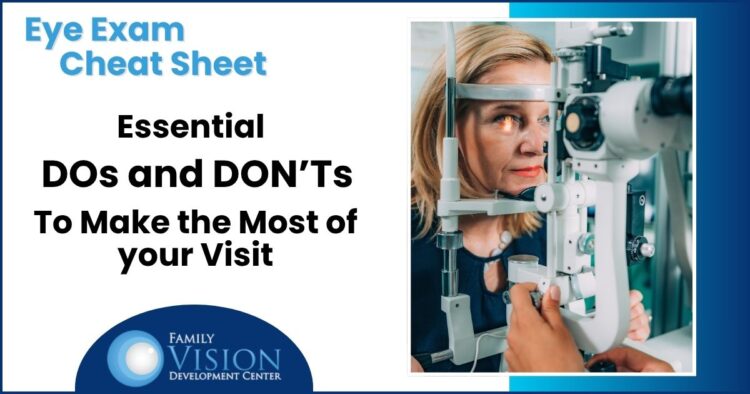
Preparing for an eye exam does not have to be difficult or complicated. But, it is an important way to get the most out of your visit. A comprehensive vision exam includes much more than just determining if you need glasses or a new prescription. The exam provides us the opportunity to get a complete evaluation on your vision, eye health, focusing ability and how well your eyes work together.
Through a series of tests, we are able to detect both obvious and underlying issues and suggest the appropriate options for correcting any visual concerns. The more complete information we have, the more accurate results we can obtain. That’s why preparing for an eye exam ahead of time matters. Here’s what you should do before you arrive for your appointment.
DO Bring your Current Insurance Information
We want to make sure as many people as possible are able to receive the vision care they need, and that’s why we work many vision insurance providers. Bringing your most up-to-date information allows us to properly submit your claim. If you do not have insurance, we can still work with you! Be sure to contact us before your appointment to determine the best alternative payment options to help with your care.
DO Gather Complete Medical History
Part of properly preparing for an eye exam includes gathering vital medical information, including a list of current medications, and as complete of a family medical history as possible. This information gives us a clearer picture of possible prescription side effects, increased risk factors for certain conditions, and helps us more accurately interpret test results.
DON’T Forget to Bring your Current Glasses or Contact Lenses
Before coming to the office, gather all of the glasses you wear, including reading glasses, prescription sunglasses, computer glasses, etc. We want to see what lenses you currently have, how they are working, what needs improvement, as well as compare the new prescription to the old one. If you wear contacts, don’t wear them to the appointment, but do bring the box with so we can note the brand, lens type, power, base curve, and diameter if possible. This information helps us evaluate your current fit and discuss whether another option may better suit your comfort or vision needs.
DO Make a List of Questions and Visual Concerns
Sitting in a medical office can be an intimidating experience. We try to make the environment here as relaxing and welcoming as possible, but we know that trying to focus on participating in the exam can make you forget important questions you wanted to ask. When preparing for an eye exam, write down any questions you may have about your eye health, benefits of vision therapy programs for school or sports, or even suggestions for a different shape frame for your glasses. If you have experienced any concerning symptoms like frequent headaches, difficulty focusing, light sensitivity, floaters or flashes or balance issues, be sure to let us know during your appointment.
DON’T Squeeze the Appointment into a Packed Day
We understand that schedules get very busy, and we appreciate that you are making time for your eye health. However, if possible, try to schedule your appointment during a time when you are not feeling especially rushed or preoccupied with other impending tasks for the day. Allow yourself the chance to take your time when answering questions and participating in the evaluation, as well as asking any follow-up questions. Also, if your eyes are dilated for the exam, this can increase light sensitivity which can make driving to additional appointments more difficult.
Preparing For an Eye Exam is Important for the Best Experience
At Family Vision Development Center, we want to make sure all of our patients receive the best possible care at every visit. Whether it’s your first time here or your tenth, properly preparing ahead of time can make a world of difference in your overall experience. Contact us at 630-862-2020 with any additional questions or to get your appointment scheduled as soon as possible.
Family Vision Development Center is a full-service vision center offering innovative vision therapy services, sports vision therapy services, post-concussive vision rehabilitation, comprehensive vision exams for eyeglasses and contact lenses, management of ocular diseases including glaucoma, diabetes, macular degeneration and cataracts, and a state-of-the-art optical center offering the latest designs in eyewear.