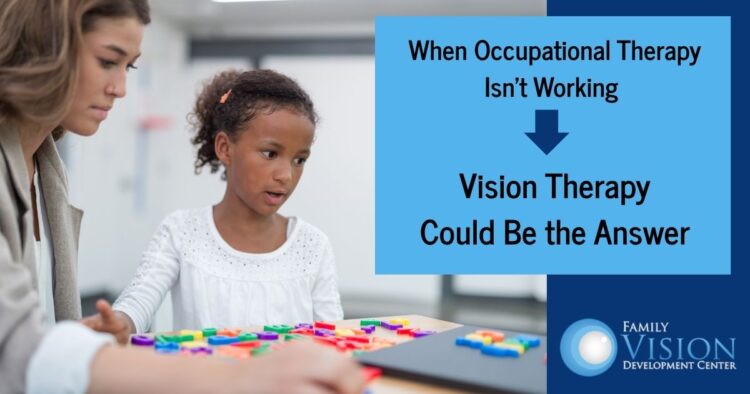
An occupational therapist can play an important role in helping a child build the skills they need to succeed in daily life. They work with kids to develop essential skills like handwriting, proper coordination, attention and taking care of themselves. But if a child is still struggling, even after consistent therapy, there might be another issue interfering – their visual skills.
Vision is more than just seeing clearly. It is actually a complex system that involves the eyes working together as a team and the brain properly processing the visual information it receives. When these systems are not functioning correctly, children may have trouble performing tasks that seem unrelated to eyesight. That’s where a tailored vision therapy program can make a significant difference.
Understanding the Signs of Visual Dysfunction
Children don’t always understand that a vision issue is present, so they don’t know how to communicate what the problem is. Instead, they often simply adapt to their circumstances and they end up compensating in ways that further complicate their developmental progress. When an occupational therapist works with a child over a period of time, they are able to observe certain patterns and signs that vision therapy could be necessary. Some common signs that may indicate a need for a vision therapy evaluation include:
- Poor eye-hand coordination, such as difficulty catching a ball, completing puzzles, or using utensils
- Avoiding close-up tasks like coloring, reading, or writing
- Frequently losing their place when reading or copying from a board
- Reversing letters or numbers
- Excessive head movement or closing one eye when focusing
- Short attention span during tasks that require visual concentration
- Frequent headaches, eye strain, or fatigue
- Difficulty with coordinating both sides of the body
These challenges may be the result of issues like poor eye teaming (binocular vision), inaccurate eye movements (tracking), or difficulty focusing (accommodation).
How Vision Therapy Supports the Goals of an Occupational Therapist
When a child’s visual skills are not developed properly, they may not be able to fully benefit from working with their occupational therapist. For example, a child’s difficulty with their handwriting sessions might not be due to a weakness in fine motor skills. Instead, it could be because their eyes cannot efficiently track across a page or maintain focus.
Vision therapy is a personalized program designed to improve visual function and processing. It targets skills such as:
- Eye teaming and alignment
- Tracking and visual scanning
- Focusing flexibility
- Visual memory and processing speed
By addressing these foundational skills, vision therapy can make it easier for a child to participate in OT and make more consistent progress.
Collaboration Leads to Better Outcomes
Occupational therapists and optometrists share a common goal – helping children succeed in their daily environments. When these providers work together with a unified treatment plan, children benefit from a more comprehensive, whole-child approach.
The team at Family Vision Development Center has extensive training and experience in vision therapy treatment. We work with each child to create an individualized plan that targets their specific visual challenges, so they get the most benefit from their work with their occupational therapist. The earlier we can identify issues and get to work with the right therapy, the quicker we can help prevent a child’s frustration, improve their confidence and support their long-term success, both in and out of therapy. Contact us at 630-862-2020 to learn more.
Family Vision Development Center is a full-service vision center offering innovative vision therapy services, sports vision therapy services, post-concussive vision rehabilitation, comprehensive vision exams for eyeglasses and contact lenses, management of ocular diseases including glaucoma, diabetes, macular degeneration and cataracts, and a state-of-the-art optical center offering the latest designs in eyewear.
Changes in vision are common as people age, but not all vision loss comes from simply getting older. For many seniors, low vision can have a significant impact on their daily life, from reading and driving to recognizing faces and maintaining their independence. But the good news is that with the right care and support, you can manage low vision and continue enjoying your everyday activities. Here are 10 important facts to help you better understand low vision and what you can do about it.
What is Low Vision?
Low vision does not mean total blindness. It does mean that level of vision loss that has occurred cannot be fully corrected with glasses, contact lenses or other medical treatments. The reduced vision can make everyday tasks more difficult, and can include challenges like:
- Blurry or hazy vision
- Difficulty seeing in low light
- Trouble reading small print
- Reduced central or peripheral vision
Low Vision Affects More People Than You Might Expect
Millions of older adults experience low vision, especially after the age of 65. And, as the typical life expectancy increases, the number of people dealing with age-related eye conditions also goes up. While that fact may not resolve your condition, it may bring some comfort knowing that so many people are sharing the same experience and can relate to your concerns.
Age-Related Macular Degeneration Causes Vision Issues
One of the most common causes of low vision is macular degeneration, which affects the central part of your vision. This can make it difficult to read, drive or even recognize faces like you used to. While there is no cure, early detection and ongoing monitoring by our team can help slow progression and preserve vision.
Cataracts Can Also Cause Low Vision
Cataracts cause the eye’s natural lens to become cloudy, leading to blurry vision, light sensitivity or difficulty seeing well at night. The good news here is that cataracts can be treated. We can evaluate your condition and make the appropriate recommendations for treatment in order to restore clearer vision.
Additional Eye Conditions Can Play a Role
In addition to macular degeneration and cataracts, other conditions can also result in low vision, including glaucoma, diabetic retinopathy or retinal disorders. Each of these conditions requires a different approach for care, which is why it is so important to see us regularly so we can make sure you receive the most personalized plan for treatment.
Low Vision Doesn’t Mean You Can’t Live Independently
With the right tools and strategies, many people with low vision continue to live on their own without major problems. Certain adjustments such as installing better lighting, using items with contrasting colors, and assistive devices can make a big difference in successfully maintaining your independence.
Specialized Vision Aids Can Help
There are many devices that are specifically designed for low vision, such as magnifying devices, large print books, high-contrast clocks or large-button phones. Using any of these devices can make daily life much easier, including maintaining the ability to read important items such as medicine bottles, recipes or instructions.
Regular Vision Exams Are Essential
Routine eye exams are one of the most important steps you can take to properly manage low vision and help to ensure long-term eye health. During your comprehensive exam we can:
- Detect early signs of eye disease
- Monitor progression of conditions like macular degeneration
- Adjust your treatment plan as needed
Early intervention is very important, as it can help preserve your remaining vision by starting treatment quickly.
Changing Habits Can Help Protect Remaining Vision
Making changes to certain daily activities can help to keep your eyes healthy. For example, eating leafy greens, wearing sunglasses outdoors and properly managing diabetes or high blood pressure can all support visual health on an ongoing basis.
You Don’t Have to Navigate Low Vision Alone
Living with low vision can feel overwhelming, but you’re not alone. There are many resources available for assistance and the Family Vision Development Center team is here to provide essential support. With the right care plan and proper daily adjustments, you can maintain independence and continue doing the things you love. Reach out to our office at 630-862-2020 for additional information or to schedule an appointment.
Family Vision Development Center is a full-service vision center offering innovative vision therapy services, sports vision therapy services, post-concussive vision rehabilitation, comprehensive vision exams for eyeglasses and contact lenses, management of ocular diseases including glaucoma, diabetes, macular degeneration and cataracts, and a state-of-the-art optical center offering the latest designs in eyewear.